 Pin It
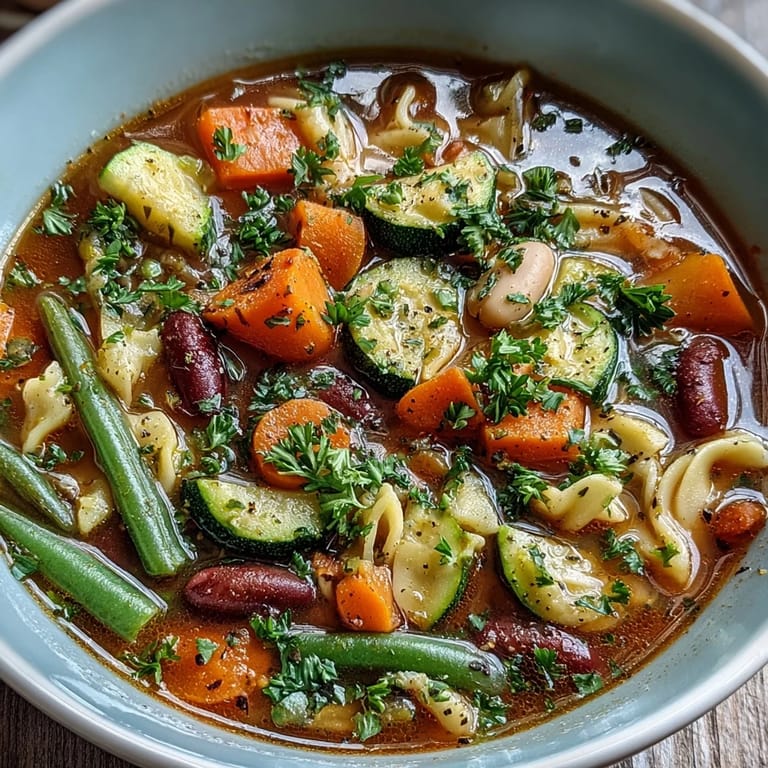
 The first time I made minestrone, I was living in a tiny apartment with a kitchen so small I had to prep vegetables on the coffee table. A friend had dropped off a bag of garden fresh produce, and I just started chopping whatever was there and tossing it into my biggest pot. That soup turned into the best meal I had made in months, proving that sometimes the most comforting dishes come from working with what you have.
Last winter, my neighbor came over unexpectedly while this was bubbling away on the stove. The smell of garlic and herbs had drifted through the hallway, and she ended up staying for dinner. We sat at my chipped kitchen table with crusty bread, dipping it into our bowls long after the soup was gone, talking until the steam stopped rising from our bowls.
Ingredients
- 2 tablespoons olive oil: This creates the aromatic foundation that carries all the vegetable flavors forward
- 1 medium yellow onion, diced: Sweet onions work beautifully here and break down nicely during simmering
- 2 carrots, peeled and sliced: They add natural sweetness and hold their texture through the long simmer
- 2 celery stalks, sliced: Essential for that classic soup base depth that Italians call soffritto
- 2 cloves garlic, minced: Add this after the initial vegetables soften so it does not burn and turn bitter
- 1 medium zucchini, diced: Use small to medium zucchini as larger ones can get watery and mushy
- 1 medium potato, peeled and diced: Yukon Gold or red potatoes hold shape better than russets
- 1 cup green beans, chopped: Fresh green beans give a better snap than frozen ones
- 1 can (400 g/14 oz) diced tomatoes: Whole tomatoes crushed by hand create more interesting texture than pre diced
- 1 can (400 g/14 oz) cannellini beans, drained and rinsed: These creamy beans make the soup substantial without meat
- 1 cup small pasta: Ditalini or elbow macaroni catches in your spoon better than longer shapes
- 1.5 liters (6 cups) vegetable broth: Good quality broth matters here as it becomes the primary flavor carrier
- 2 teaspoons dried Italian herbs: A blend of oregano, basil, and thyme gives that classic Italian herb garden aroma
- 1 bay leaf: This subtle herb adds a background depth that you notice most when it is missing
- Salt and freshly ground black pepper, to taste: Season gradually as different vegetables release different amounts of water
- 2 cups baby spinach or chopped kale: Baby spinach wilts instantly while kale needs a minute longer to soften
- 2 tablespoons fresh parsley, chopped: Flat leaf parsley has a cleaner, brighter flavor than curly parsley
- Freshly grated Parmesan cheese, for serving (optional): A generous sprinkle on top transforms the final bowl
Tired of Takeout? 🥡
Get 10 meals you can make faster than delivery arrives. Seriously.
One email. No spam. Unsubscribe anytime.
Instructions
- Build your aromatic base:
- Heat the olive oil in your largest soup pot over medium heat, then add the onion, carrots, and celery. Let them soften for about 5 minutes until the onion turns translucent and the kitchen starts to smell wonderful.
- Add more vegetables:
- Stir in the garlic, zucchini, potato, and green beans. Cook for another 3 minutes, just until the garlic becomes fragrant and the vegetables start to glisten with oil.
- Create the soup body:
- Pour in the diced tomatoes with their juices, the cannellini beans, vegetable broth, dried herbs, and bay leaf. Bring everything to a gentle boil, watching as the tomatoes release their red color into the broth.
- Let it develop:
- Reduce the heat to low, cover the pot, and let it simmer for 20 minutes. The vegetables should be becoming tender and the broth should be thickening slightly as the potatoes release some starch.
- Cook the pasta:
- Stir in the small pasta and simmer uncovered for 8 to 10 minutes. Taste a piece of pasta to ensure it is cooked through but still has some bite to it.
- Finish with greens:
- Fish out and discard the bay leaf, then add the spinach or kale. Cook for just 2 minutes until the greens wilt into the soup, turning bright green before softening.
- Season and serve:
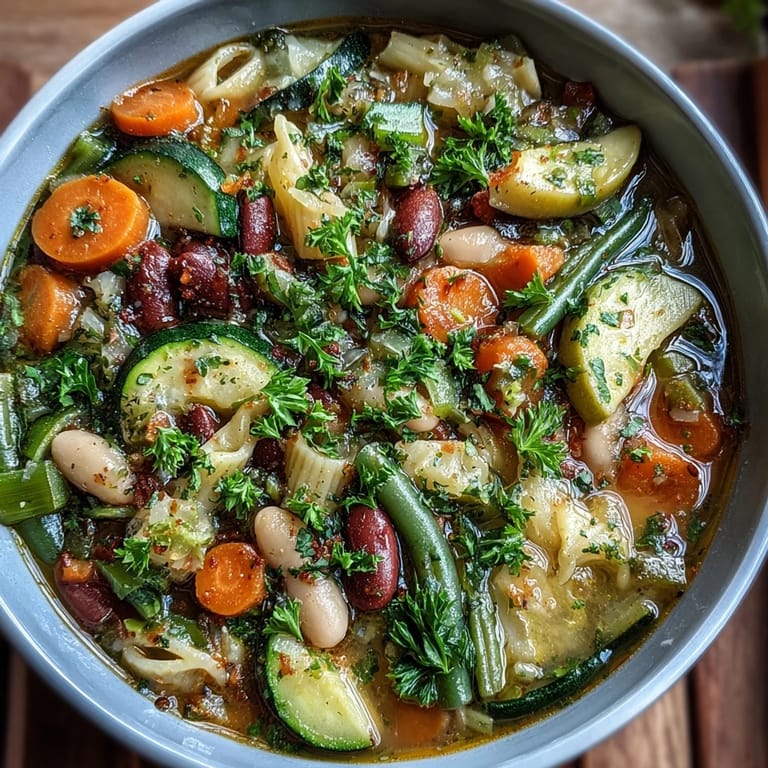
- Taste and add salt and pepper as needed. Ladle into warm bowls, sprinkle generously with fresh parsley, and add a mound of grated Parmesan if you like.
 Pin It
 My grandmother used to say that minestrone was never meant to follow a strict recipe, and the best bowls she made were always the ones using up whatever was wilting in the crisper drawer. Now whenever I make it, I think of her practical wisdom and how the simplest ingredients, treated with care, become something that gathers people around the table.
Making It Your Own
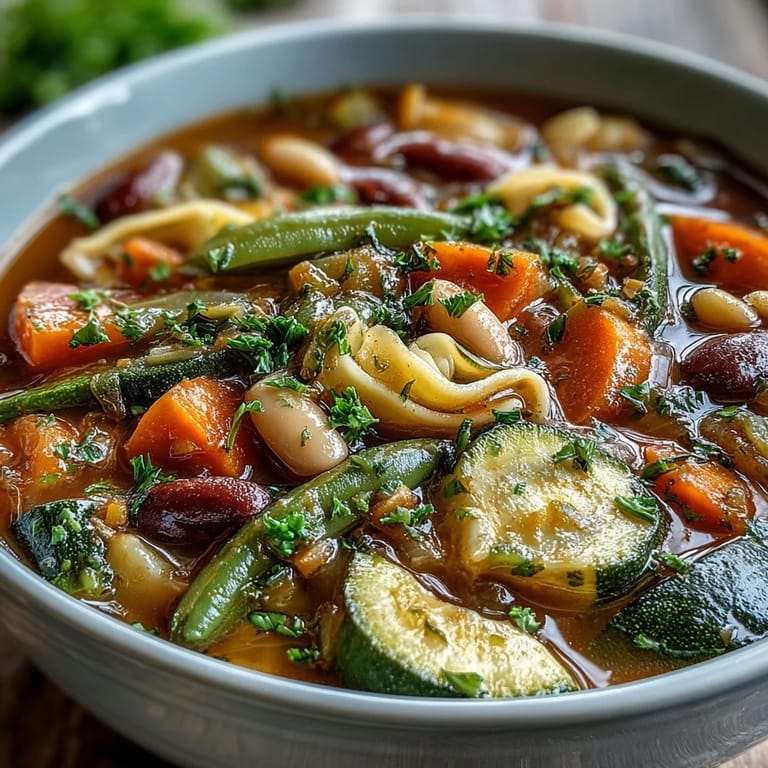
This soup welcomes whatever vegetables you have on hand. I have added diced butternut squash in fall, peas and asparagus in spring, and even leftover roasted vegetables when I needed to clean out the fridge. The key is keeping the pieces roughly the same size so everything cooks evenly.
The Pasta Question
Cooking pasta directly in the soup thickens the broth and infuses the noodles with flavor, but they will continue softening as the soup sits. If you prefer al dente pasta every time, cook it separately and add it to individual bowls when serving. For leftovers, you might want to add a splash more broth as the pasta keeps drinking it up.
Perfecting The Broth
Homemade vegetable broth makes a noticeable difference, but not everyone has time to make it from scratch. A good quality store bought broth works perfectly fine, especially if you bolster it with extra herbs and maybe that Parmesan rind trick. The broth should be well seasoned before you add it, as vegetables absorb salt differently depending on their water content.
- Taste the broth before adding it to the soup and adjust seasoning if needed
- Add a splash of white wine or lemon juice for brightness if the soup tastes too flat
- Let the soup rest for 10 minutes before serving to let flavors meld together
 Pin It
 This soup only gets better after a day or two in the refrigerator, making it perfect for meal prep or unexpected guests. There is something deeply satisfying about knowing you have a pot of it waiting in the fridge.
Recipe FAQs
- → Can I make minestrone soup gluten-free?
Yes, simply substitute regular pasta with gluten-free pasta shapes like ditalini or macaroni. Always verify that your vegetable broth and other processed ingredients are certified gluten-free.
- → How long does minestrone soup last in the refrigerator?
Stored in an airtight container, minestrone keeps well for 4-5 days. The pasta may absorb more liquid over time, so you might need to add extra broth when reheating.
- → Can I freeze minestrone soup?
Yes, freeze for up to 3 months. For best results, cook the pasta separately and add it when reheating to prevent it from becoming mushy. Cool completely before freezing in freezer-safe containers.
- → What vegetables work best in minestrone?
Traditional minestrone includes carrots, celery, onions, zucchini, and green beans. You can also add seasonal vegetables like cabbage, butternut squash, peas, or Swiss chard based on availability and preference.
- → Is minestrone soup vegan?
The base soup is naturally vegan when made with vegetable broth. Omit the Parmesan cheese garnish or use vegan cheese alternatives. The soup is packed with plant-based protein from beans and vegetables.
- → What type of pasta should I use?
Small pasta shapes work best in minestrone. Ditalini, elbow macaroni, small shells, or tubetti are ideal choices. These shapes hold up well during simmering and are easy to scoop with a spoon.