 Pin It
 My coworker Marcus brought one of these bowls to lunch one Tuesday, and the aroma of sesame and salmon hit me before he even opened the container. I watched him drizzle that chili oil with the confidence of someone who'd made this a dozen times, and I knew I had to learn. What started as a casual request for his recipe became my go-to when I need something that feels both indulgent and effortless, ready in less than forty minutes.
I made this for my sister when she was visiting from out of state, and she ate the entire bowl in focused silence before asking for the recipe and another one. There's something about arranging all those contrasting textures and colors that makes a simple meal feel like you're treating someone you care about.
Ingredients
- Fresh salmon fillet, skinless, cut into bite-sized cubes (250 g): Look for sushi-grade salmon if you can, though regular fresh salmon works fine when sliced into small pieces that marinate evenly.
- Tamari sauce (2 tbsp): This is naturally gluten-free soy sauce with deeper flavor, and it makes a real difference in the marinade's complexity compared to regular soy sauce.
- Toasted sesame oil (1 tsp): A tiny amount goes far because the nutty flavor is intense; don't skip the toasted variety or you'll miss half the taste.
- Rice vinegar (2 tsp total, divided): One teaspoon seasons the marinade, the other seasons the rice, so measure carefully and use the good stuff if your pantry has it.
- Honey or agave syrup (1 tsp): This balances the tamari's saltiness and helps the salmon absorb the marinade more completely.
- Cooked sushi rice (200 g or about 1 cup uncooked): Sushi rice has the right starch content for holding seasoning; regular rice tastes noticeably less vibrant in this bowl.
- Sugar (1/2 tsp): Just enough to season the rice without making it sweet, enhancing the vinegar rather than fighting it.
- Ripe avocado (1 large): Slice it just before assembling so it stays buttery and doesn't oxidize into that sad gray-green color.
- Roasted peanuts (2 tbsp, roughly chopped): The crunch is essential here; buy them roasted and unsalted so they don't compete with the other flavors.
- Chili oil (1 tbsp): Start with less if you're unsure, because heat builds throughout the bowl and you can always drizzle more at the table.
- Wasabi paste (1 tsp): Fresh wasabi is incredible if you find it, but the tube version does the job and has a predictable punch.
- Nori sheets, cut into strips (1 sheet): Toast them briefly over a flame if you want the crispy texture to last longer through the meal.
- Cucumber, thinly sliced (1 small): The coolness and crunch balance everything else, so don't skip it even if you think you don't like cucumber.
- Spring onions, sliced (2): They add a sharp freshness that keeps the bowl from feeling heavy, and the green parts are just as important as the white parts.
- Toasted sesame seeds (1 tbsp): These toast at home in a dry pan in about two minutes if you can't find them pre-toasted.
- Fresh cilantro or microgreens (optional garnish): Cilantro is traditional but microgreens add a peppery sophistication if that's what you're after.
- Lime wedges (for serving): A squeeze brightens everything at the last second, so always offer them even if people think they won't use them.
Tired of Takeout? 🥡
Get 10 meals you can make faster than delivery arrives. Seriously.
One email. No spam. Unsubscribe anytime.
Instructions
- Build Your Marinade:
- Whisk together tamari, toasted sesame oil, rice vinegar, and honey in a medium bowl until the honey dissolves completely. This is your flavor foundation, so take a second to taste it—it should hit you with salt, nuttiness, and subtle sweetness all at once.
- Marinate the Salmon:
- Add your salmon cubes to the marinade and toss gently to coat every piece evenly. Cover and refrigerate for 10 to 15 minutes while you prep everything else; the cold time helps the fish absorb flavors without becoming mushy.
- Season the Rice:
- In a separate bowl, combine your warm cooked sushi rice with rice vinegar, sugar, and a pinch of salt. Fold gently rather than stirring to keep the grains intact, and let it cool slightly so it's pleasant to eat.
- Prep All Your Toppings:
- Slice the avocado, chop the peanuts, cut nori into strips, and slice your cucumber and spring onions. Having everything ready means assembly takes two minutes instead of ten, and nothing sits around oxidizing.
- Assemble the Bowls:
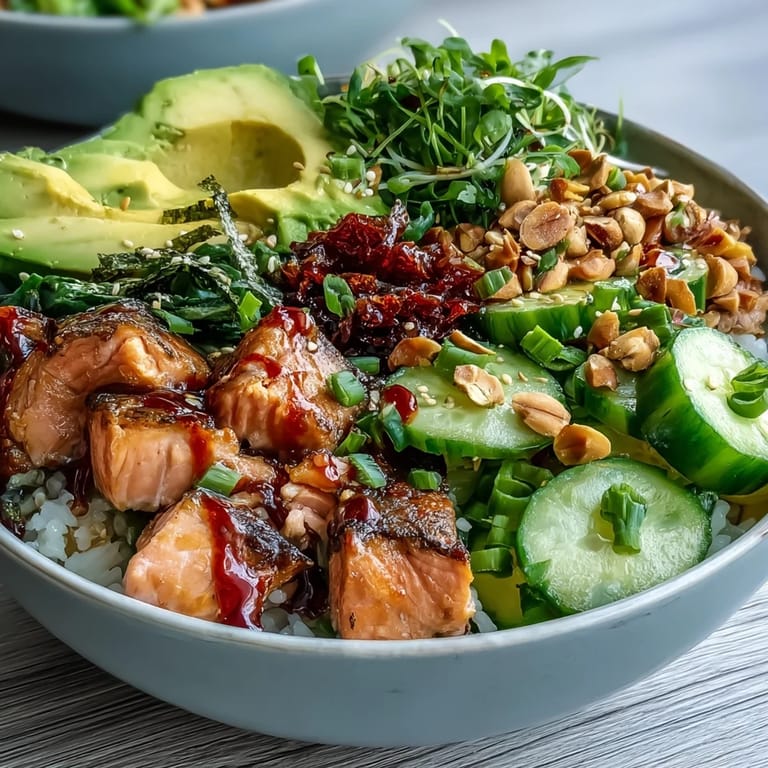
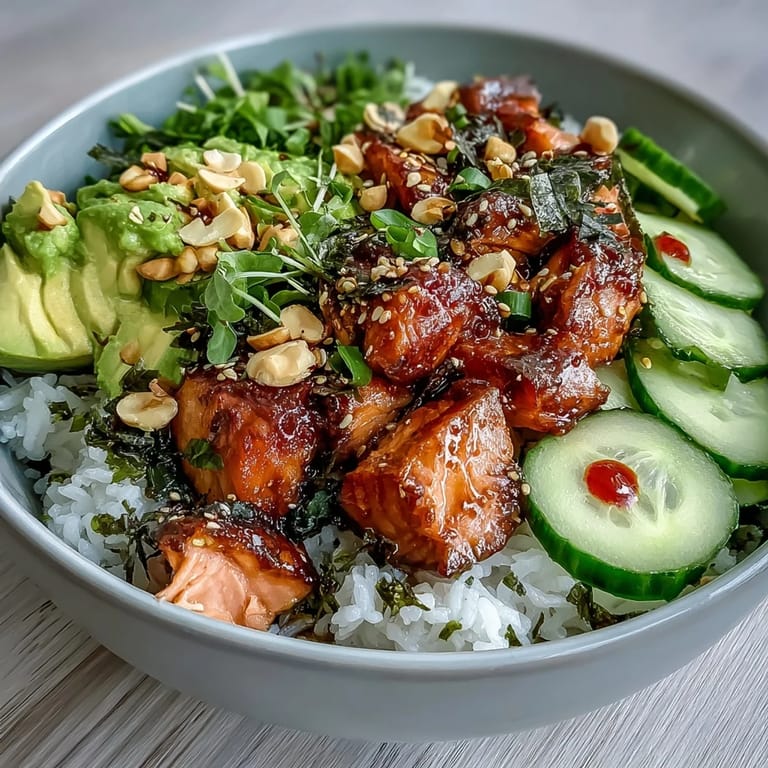
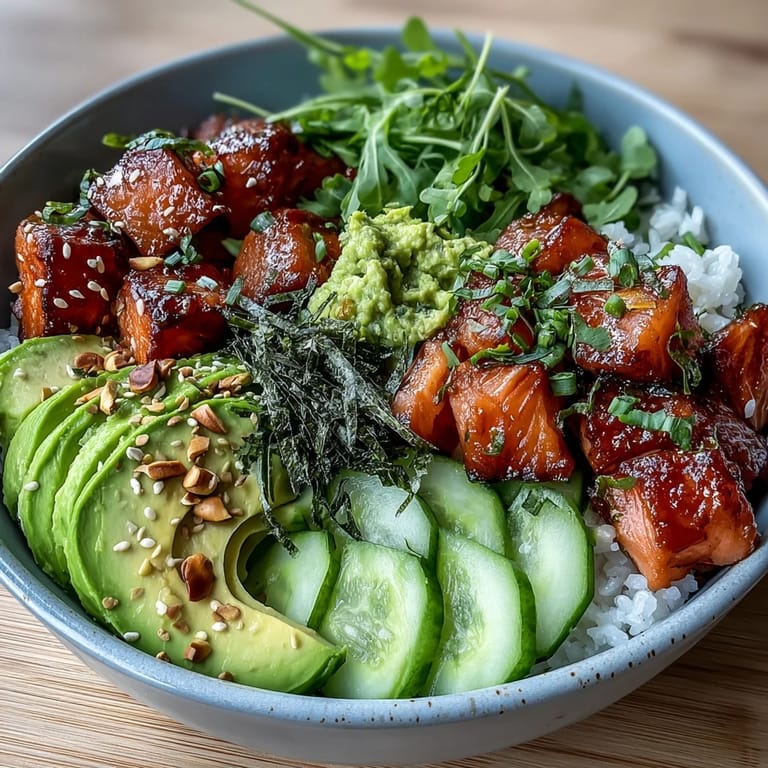
- Divide the seasoned rice between two serving bowls, creating an even base that you can build on. Arrange the marinated salmon, avocado slices, cucumber, and spring onions on top in whatever pattern appeals to you.
- Add the Finishing Layers:
- Drizzle chili oil across the top and add small dots of wasabi paste where you think you'll eat them first. Sprinkle with roasted peanuts, sesame seeds, and nori strips so every bite has a chance of hitting all the textures.
- Garnish and Serve:
- Top with fresh cilantro or microgreens if using, and serve with lime wedges on the side. Squeeze the lime over the bowl just before eating to brighten all those deep umami flavors.
 Pin It
 There's a moment when you're building the bowl and everything is still separate in your hands before you've plated it, and you realize you're about to create something genuinely beautiful. That small pause of anticipation before the first bite is when this dish becomes more than lunch.
The Art of Balancing Heat and Cool
The first time I made this, I used room-temperature ingredients throughout and wondered why it felt flat compared to Marcus's version. Warmth matters here—the hot rice carries the vinegar seasoning deeper, while the cold avocado and cucumber stay crisp and provide textural contrast. If you have time, even warming your serving bowls with hot water for a minute before draining them completely makes the whole experience feel more intentional.
Making It Your Own Without Losing the Plot
I've tried versions with tofu when I didn't have salmon, swapped cashews for peanuts when someone had an allergy, and even added pickled ginger because it was sitting in my fridge. The bowl is forgiving as long as you keep the core balance—something creamy, something spicy, something umami-rich, and something with crunch. The marinade-to-rice-to-fresh-toppings formula is what makes this work, so experiment with your swaps there instead of reinventing the entire structure.
Storage and Next-Day Reality
This is a now-or-never dish, honestly—the components don't keep well together because the rice absorbs all the moisture and the avocado oxidizes if it sits in the bowl. If you need to meal prep, store the marinated salmon, seasoned rice, and prepared toppings in separate containers and assemble fresh each day, which takes maybe five minutes. The good news is that since nothing requires cooking beyond the rice, you can still throw this together on a busy evening without stress.
- Make extra seasoned rice in the morning because it's the only component that actually improves after a few hours as the flavors settle.
- Slice your avocado only when you're ready to eat so it stays bright green and creamy instead of browning.
- Keep the chili oil and wasabi at room temperature so they taste bolder than they would straight from the cold fridge.
 Pin It
 This bowl has become my answer to the question of what to eat when I want something that feels special but doesn't require special skills. Every time I make it, I remember why Marcus was so confident with that drizzle of chili oil.
Recipe FAQs
- → Can I make this bowl ahead of time?
Prepare the rice and toppings in advance, but marinate the salmon just before cooking for best texture. Assemble everything right before serving to maintain the crispy elements and fresh flavors.
- → What can I use instead of salmon?
Marinated tofu or tempeh work beautifully for a vegetarian option. You could also use cooked shrimp, tuna, or even grilled chicken if you prefer different proteins.
- → How do I store leftovers?
Keep components separate in airtight containers in the refrigerator for up to 2 days. Store the salmon marinated but uncooked, and reheat gently before assembling your bowl.
- → Can I adjust the spice level?
Absolutely. Start with less chili oil and wasabi, then add more to taste. The heat is completely customizable based on your preference, making this dish family-friendly.
- → Is sushi rice necessary?
While sushi rice provides the best texture and flavor, you can use jasmine rice, brown rice, or even quinoa as alternatives. Just adjust the seasoning to taste.
- → How do I know when the salmon is done?
The salmon cubes should turn opaque and flake easily with a fork. Since they're bite-sized, they cook quickly—usually just a few minutes per side in a hot pan.