 Pin It
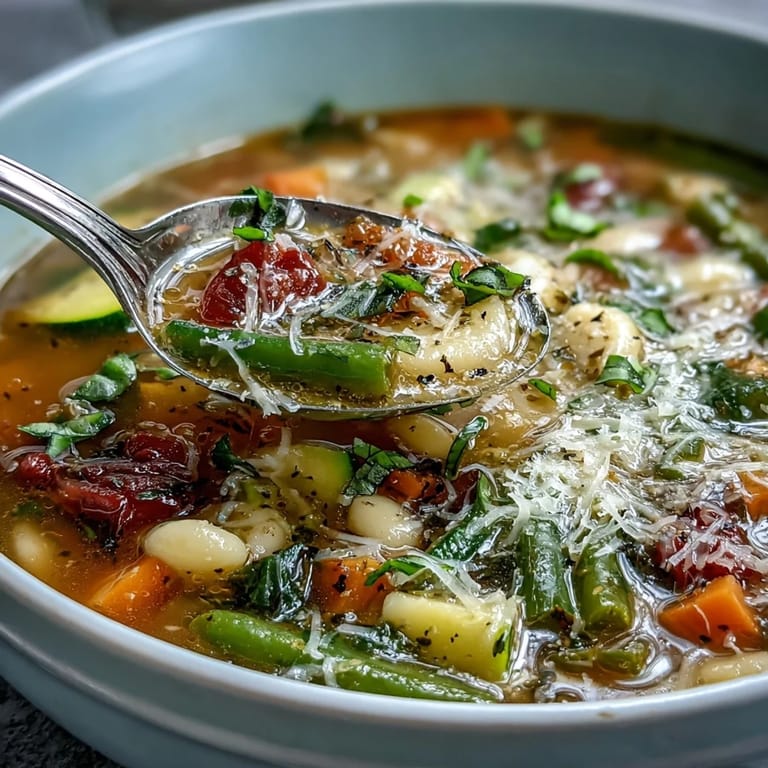
 There's something about autumn that makes me crave minestrone, though honestly, I've learned this soup doesn't need permission from any season to show up on the table. One rainy Tuesday, I opened my fridge to find half a zucchini, some carrots going soft, and a can of beans I'd been meaning to use, so I threw together this Italian classic without overthinking it. The kitchen filled with the smell of garlic and tomatoes within minutes, and by the time my roommate came home, there were already three bowls waiting on the counter. That's when I realized minestrone isn't really a recipe—it's more like a warm hug that happens to be edible.
I made this for my grandmother once, and she spent the entire meal picking out the individual vegetables like she was conducting an archaeological dig, telling me stories about how her mother made it differently in Naples. She never said mine was better, but she asked for the recipe, and that felt like winning the lottery. Now whenever someone visits and finds a pot of this simmering on my stove, they know they're staying for dinner whether they planned to or not.
Ingredients
- Olive oil: Two tablespoons is your foundation—good olive oil makes the difference, but don't use your fancy finishing oil here.
- Onion and garlic: These two are your aromatic base, and sautéing them first teaches them to play nice with everything else coming into the pot.
- Carrots, celery, and zucchini: Each vegetable brings its own sweetness and texture, so don't skip any even if you think you don't like one—they transform when they cook down.
- Potato: This isn't just filler; it adds body to the broth and makes the soup feel substantial without being heavy.
- Green beans: They stay a little firmer than the other vegetables, which gives you texture variation that keeps your spoon interested.
- Canned tomatoes: Use the whole can with its juices—that's where the flavor lives.
- Vegetable broth and water: The combination gives you control over saltiness; pure broth can overwhelm, but pure water leaves it flat.
- Cannellini beans: Drain and rinse them thoroughly or your soup will taste tinny instead of bright.
- Pasta: Small shapes like ditalini work best because they don't overpower the delicate vegetables.
- Dried herbs: Oregano and basil do the heavy lifting while the soup cooks, building a foundation for the fresh herbs to shine.
- Fresh parsley and basil: Add these at the very end so they taste like green, alive things instead of cooked ghosts of themselves.
- Parmesan cheese: A light shower transforms each bite into something more luxurious.
Tired of Takeout? 🥡
Get 10 meals you can make faster than delivery arrives. Seriously.
One email. No spam. Unsubscribe anytime.
Instructions
- Sauté your aromatics:
- Heat olive oil over medium heat and add your chopped onion and minced garlic, cooking until the onion turns translucent and the garlic stops smelling sharp—about two to three minutes. You'll know it's right when the whole kitchen smells like someone's Italian grandmother just walked in.
- Build your vegetable bed:
- Add carrots, celery, zucchini, potato, and green beans to the pot, stirring them around for five to six minutes until they soften slightly at the edges. This head start means they'll all finish cooking at roughly the same time instead of some falling apart while others stay crunchy.
- Add your liquid and seasonings:
- Pour in the canned tomatoes with their juices, vegetable broth, and water, then add oregano, basil, bay leaf, salt, and pepper. Stir well and bring everything up to a boil—you'll see the surface start to move and bubble urgently.
- Simmer and let it become soup:
- Lower the heat, cover the pot, and let it cook peacefully for fifteen minutes while the vegetables break down slightly and the flavors start talking to each other. This is the hardest part because your kitchen will smell incredible and you'll want to eat it immediately.
- Add the beans and pasta:
- Stir in your drained cannellini beans and the small pasta, then let it cook uncovered for ten to twelve minutes until the pasta is tender but not mushy and the vegetables yield easily to a fork. The uncovered cooking lets some liquid reduce, concentrating the flavor and preventing a watery finish.
- Finish with fresh herbs and taste:
- Fish out the bay leaf, tear in your fresh parsley and basil, then taste and adjust salt and pepper as needed. This final taste adjustment is crucial—it's where you make it yours instead of just following along.
- Serve and celebrate:
- Ladle into bowls and finish with a generous scatter of Parmesan cheese, letting it soften slightly from the heat. This is the moment where a simple soup becomes the kind of meal people remember.
 Pin It
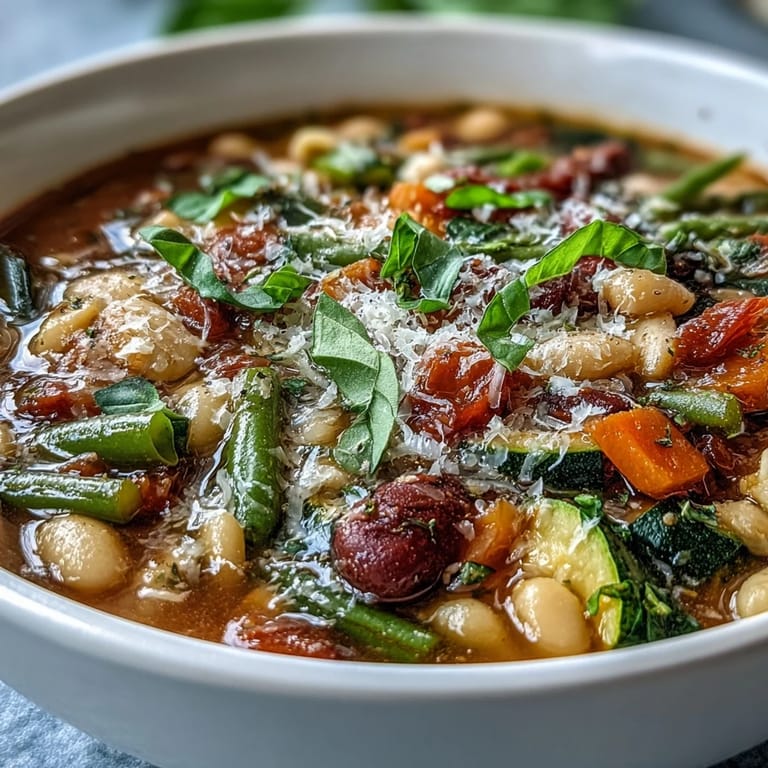
 The real magic happened when my friend brought her four-year-old daughter over and watched her eat this soup without complaining about vegetables, actually asking for more. Sometimes the best kitchen moments aren't about technique or perfectly timed steps—they're about watching someone you care about discover that food can taste this good.
The Art of Vegetable Swaps
Minestrone is actually more flexible than it looks, which makes it the perfect soup for cooking with whatever's happening in your produce drawer. I've added spinach in spring when it showed up at the farmers market, traded zucchini for eggplant in summer when that felt right, and thrown in shredded cabbage during winter because it adds a subtle sweetness. The golden rule is to keep your total vegetable volume roughly the same and stick to vegetables that soften gently in broth rather than ones that stay stubborn or fall apart completely.
Making It Your Own
Once you understand how minestrone works, you start seeing it as a template instead of a strict instruction. I've made it with cannellini beans one week and switched to chickpeas the next, changed the pasta shape based on what was in my pantry, and even experimented with adding a splash of red wine that made everything taste deeper and rounder. The pasta, beans, and broth are the framework that holds it together, but the vegetables and herbs are where you leave your fingerprints.
Storage and Serving Ideas
This soup is happiest when you make a full pot and plan to eat it through the week, as the flavors meld and deepen in the refrigerator overnight. Store it in an airtight container for up to four days, and when you're ready to reheat, warm it gently on the stove rather than blasting it in the microwave—low heat respects what the soup has become. Serve it with crusty bread for soaking up every last drop, or offer a bowl of fresh Parmesan and a pepper mill so everyone can finish their own way.
- The pasta softens more each day, so if you're making ahead, cook it slightly less than you normally would.
- You can also freeze minestrone for up to three months, though the pasta texture will never be quite the same when thawed.
- Pair it with a simple green salad and a glass of crisp white wine for a meal that feels both comforting and elegant.
 Pin It
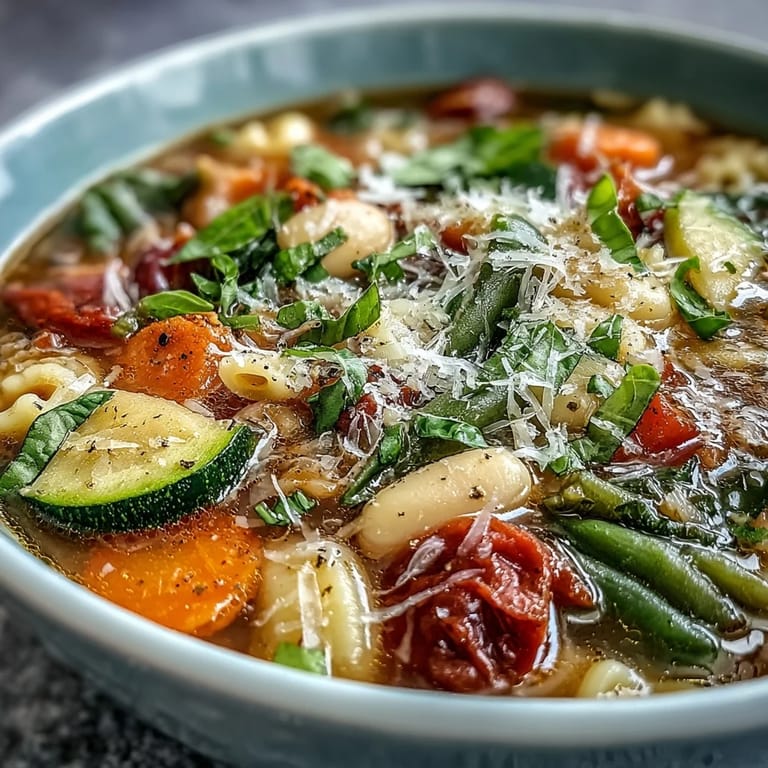
 Minestrone reminds me that the best meals don't require fancy techniques or ingredients you have to hunt down—they just need care, attention, and whatever good things you happen to have on hand. Make this soup and watch it become part of your rhythm, the one you reach for when you want something real.
Recipe FAQs
- → What vegetables work best in minestrone?
Traditional minestrone includes carrots, celery, onions, zucchini, potatoes, and green beans. You can adapt based on seasonality—try spinach, kale, or cabbage in winter, or fresh tomatoes and summer squash when they're at their peak.
- → Can I make this ahead of time?
Absolutely. Minestrone actually develops deeper flavor when made ahead. Store it in the refrigerator for up to 3 days. Add the pasta just before serving or it may absorb too much broth—add a splash of water when reheating if needed.
- → What pasta shape should I use?
Small shapes like ditalini, elbow macaroni, shells, or small tubetti work best. They catch in the spoon and cook evenly in the broth. For gluten-free versions, use rice-based small pasta or add extra beans for substance.
- → Is minestrone suitable for freezing?
Yes, freeze for up to 3 months in airtight containers. For best results, freeze without the pasta and cook fresh pasta when reheating. The broth and vegetables freeze beautifully, maintaining texture and flavor.
- → How can I add more protein?
Include extra cannellini or kidney beans, add a Parmesan rind while simmering for umami depth, or stir in cooked pancetta with the onions. For a complete protein boost, serve with a sprinkle of nutritional yeast or extra cheese.
- → What's the secret to authentic flavor?
Start with a good base—sautéing onion, garlic, carrots, and celery builds depth. Use quality vegetable broth, add dried herbs early to infuse the broth, and finish with fresh herbs just before serving. The slow simmer allows everything to meld together.