 Pin It
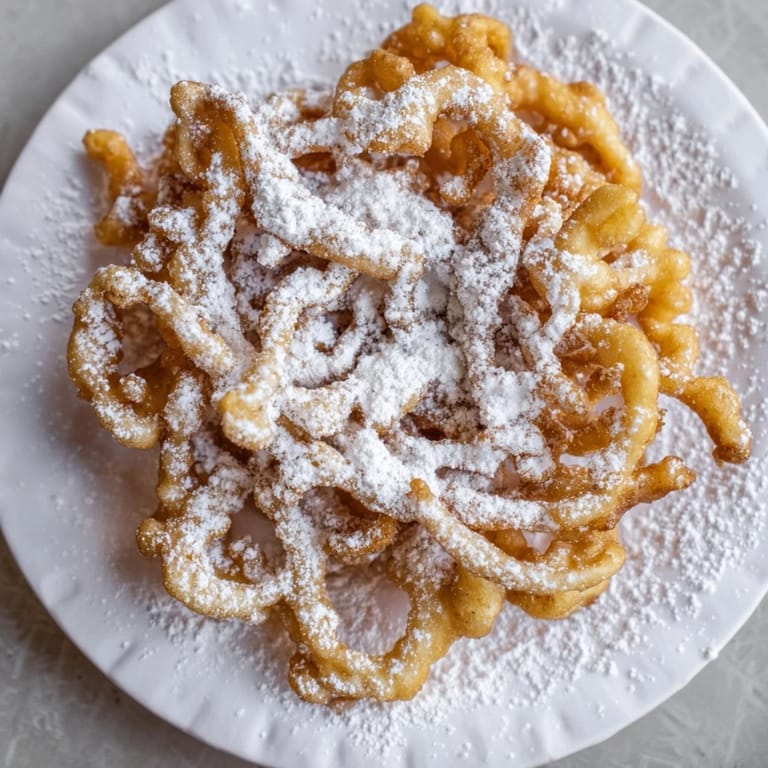
 I discovered funnel cakes by accident at a county fair, watching a vendor pour batter in lazy spirals that sizzled and puffed into golden lace. The powdered sugar dusted everything—my hands, my shirt, my shoes—but tasting that first warm, crispy bite made the mess completely worth it. Now I make them at home whenever I want to recreate that carnival magic without leaving my kitchen. There's something magical about watching ordinary batter transform into something so impossibly delicate and fun.
The first time I made these for my daughter's birthday party, I was terrified I'd mess up the funnel technique and end up with a lumpy pancake instead of something beautiful. But the moment that first golden spiral hit the oil and started to bloom, even my skeptical teenagers gathered around to watch. By the end of the afternoon, we'd gone through three batches, and I realized funnel cakes had become our new favorite tradition.
Ingredients
- All-purpose flour: The base that gives structure—don't sift it unless you love extra-airy cakes, and honestly, they're perfect either way.
- Granulated sugar: Just enough to add a subtle sweetness without overwhelming the powdered sugar finish.
- Baking powder: This is the secret to getting those little air pockets that make them crispy on the outside.
- Salt: A tiny pinch that makes the vanilla pop and rounds out the flavors.
- Eggs: They help bind everything and give the batter that golden color.
- Whole milk: Use the real thing here—it creates a richer batter that fries up gorgeously.
- Vanilla extract: A whisper of flavor that keeps things interesting without stealing the show.
- Vegetable oil: The workhorse for frying—keep it at 375°F and you'll get that perfect golden-brown finish every time.
- Powdered sugar: The grand finale that makes them feel special and festive.
Tired of Takeout? 🥡
Get 10 meals you can make faster than delivery arrives. Seriously.
One email. No spam. Unsubscribe anytime.
Instructions
- Mix the dry team:
- Whisk flour, sugar, baking powder, and salt together in a large bowl. This step takes 30 seconds and prevents lumps from hiding in your finished batter.
- Combine the wet ingredients:
- Beat the eggs first, then whisk in milk and vanilla until everything is smooth. The slight foam on top means you're doing it right.
- Marry them together:
- Add the wet ingredients to the dry ingredients gradually, stirring as you go to avoid lumps. The batter should flow easily but not look like milk—if it seems too thin, add a splash more flour.
- Heat your oil:
- Pour oil into a deep skillet to about 2 inches deep and bring it to 375°F. A kitchen thermometer takes the guesswork out, and a small test with a bit of batter tells you when it's ready.
- Pour the magic:
- Fill a funnel with about 1/2 cup batter, cover the bottom spout with your finger, and hold it 2-3 inches above the oil. Release your finger and move the funnel in slow, overlapping circles to create that beautiful lacy pattern.
- Watch and flip:
- Let each side fry for about 1 to 2 minutes until golden brown and crispy at the edges. The moment the oil stops bubbling so aggressively, it's time to flip with tongs.
- Drain and dust:
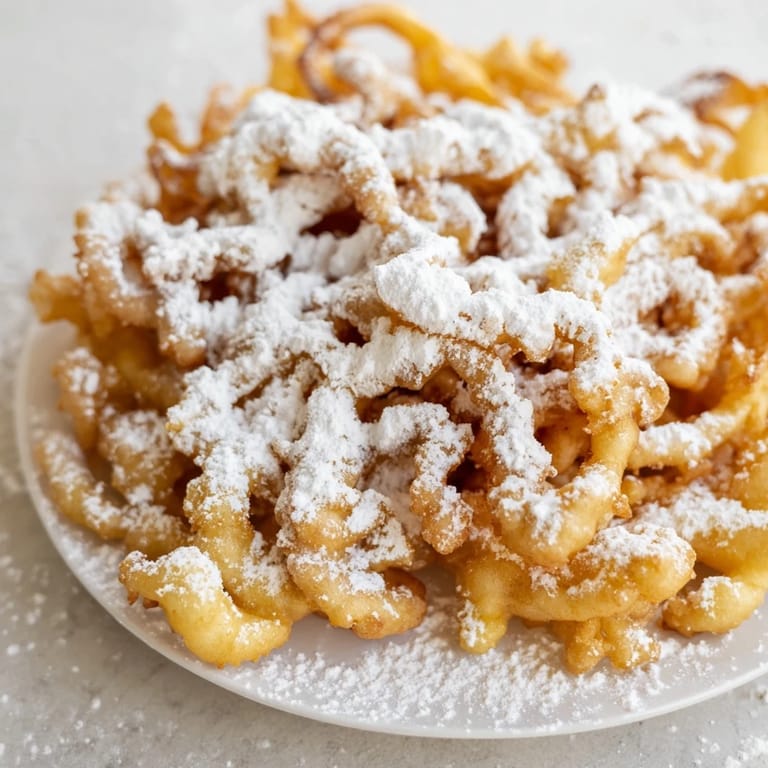
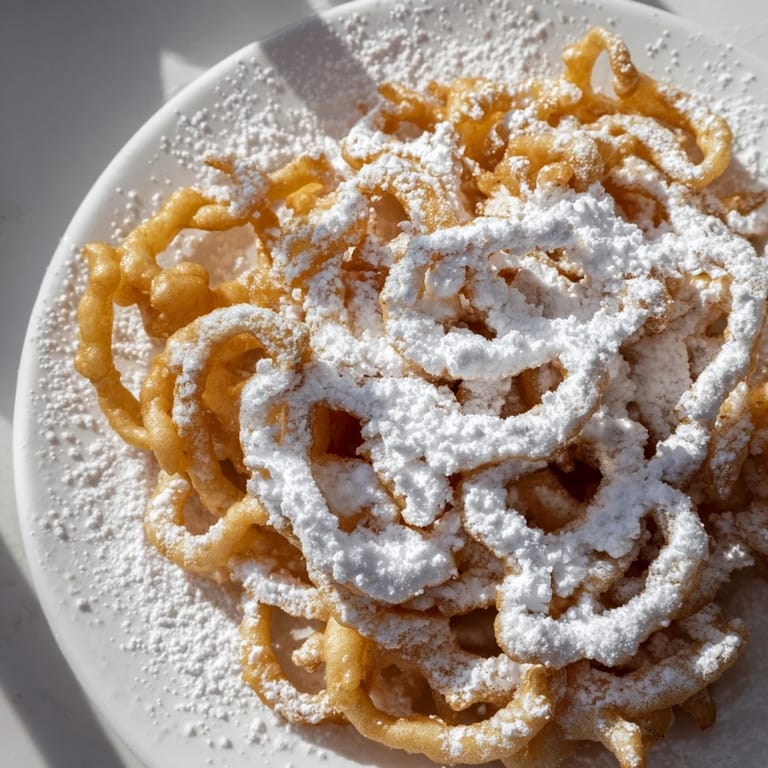
- Transfer to paper towels to drain excess oil while they're still warm. Dust generously with powdered sugar immediately—the warmth helps it stick and melt slightly into all those beautiful lacy pockets.
 Pin It
 I'll never forget my neighbor peering over the fence one afternoon when I was making these for a small gathering, drawn by the smell of fried batter and cinnamon sugar. She asked for the recipe on the spot, and now every spring when the fair season starts, she always makes funnel cakes. That's when I realized these little treats have a way of creating moments and building memories without trying too hard.
The Secret to Crispy, Lacy Perfection
The beauty of funnel cakes lies in the spiral motion—it's not about creating a perfect picture, it's about letting the hot oil do the work of crisping every thin strand of batter. When you move the funnel in slow, connected spirals, you're creating those irresistible lacy edges that shatter between your teeth. I learned this by making them messy and imperfect at first, and realizing that the wonkiest ones were often the crispiest.
Timing and Temperature Matter
The difference between a funnel cake that's crispy outside and soft inside versus one that's dense all the way through comes down to oil temperature and frying time. I keep a thermometer right next to the pan because my eyes aren't reliable judges of heat, and it's saved me more than once. Starting the batter just warm enough and not overcrowding the pan keeps everything cooking evenly and lets you fry without stress.
Make Them Your Own
Once you master the basic technique, funnel cakes become a canvas for whatever sounds good that day. I've made them dusted with cinnamon sugar, topped with chocolate sauce and raspberries, drizzled with caramel, and even sprinkled with crushed candy. The plain version is perfect, but the real joy is in playing around and discovering your favorite combination.
- Try adding a pinch of nutmeg or cardamom to the batter for warmth and depth.
- Serve them alongside fresh whipped cream, ice cream, or maple syrup for dipping.
- Make them ahead and reheat gently in a warm oven to refresh their texture right before serving.
 Pin It
 There's something wonderfully simple about funnel cakes—just a few ingredients and a little hot oil transform into something that feels like a celebration. I hope you make them and share them with people you love.
Recipe FAQs
- → What causes the lacy texture in these cakes?
The batter is poured in a swirling motion through a funnel into hot oil, creating thin, interconnected strands that result in the characteristic lacy texture.
- → Can I use alternative flours for a gluten-free version?
Yes, substituting all-purpose flour with a gluten-free blend can make the cakes suitable for gluten-sensitive diets.
- → How hot should the oil be for frying?
Heat the oil to about 375°F (190°C) to ensure the cakes cook quickly and become crisp without absorbing too much oil.
- → What variations can enhance the flavor?
Adding cinnamon or cocoa powder to the powdered sugar or topping with fresh berries, chocolate sauce, or whipped cream can add delightful flavor variations.
- → How do I know when the cakes are done frying?
They should be golden brown on both sides, which usually takes 1–2 minutes per side.