 Pin It
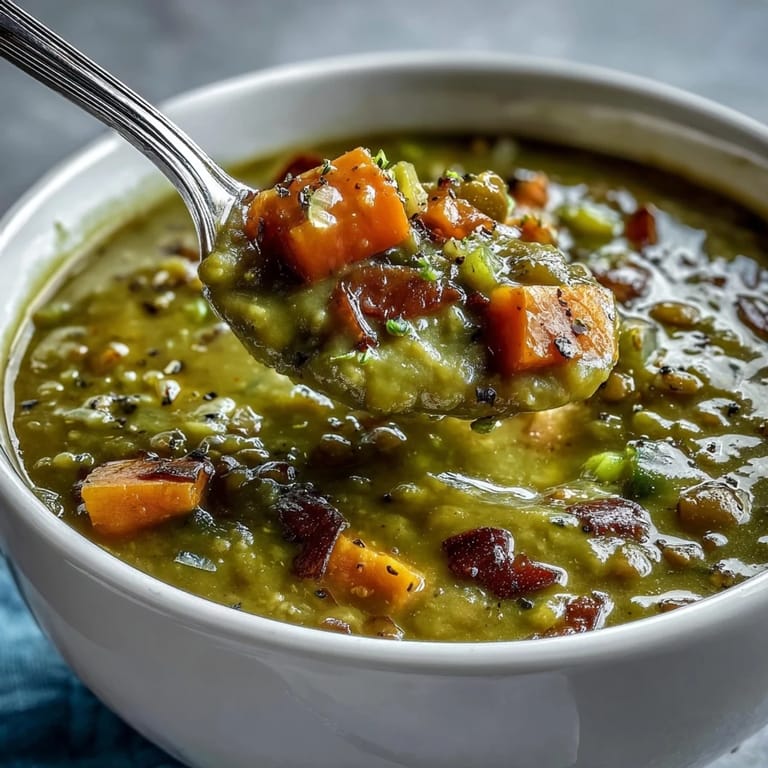
 There's something about the smell of split peas simmering that instantly makes a kitchen feel like home. My neighbor brought me a pot of this soup on a particularly gray February afternoon, and I've been chasing that same feeling ever since—the kind where steam fogs up your glasses and you can't help but ladle bowl after bowl. It's the soup that proves you don't need fancy ingredients to make something genuinely nourishing and deeply satisfying.
I made this for a potluck years ago and watched grown adults go completely quiet while eating it, which told me everything. One person came back for thirds and asked if there was ham in it, then looked genuinely disappointed when I said I'd skipped it for the vegetarian guests. That's when I realized this soup doesn't need meat to be memorable—it just needs time and good basic technique.
Ingredients
- Dried split green peas (2 cups): Rinse them first to remove any dust or debris, and don't skip this step—it makes a real difference in the final clarity and taste of your broth.
- Onion, carrots, and celery (1 large onion, 2 carrots, 2 celery stalks): This trio is the flavor foundation, so take your time dicing them into roughly similar sizes so they cook evenly.
- Garlic (2 cloves, minced): Fresh garlic becomes sweet and mellow during the long simmer, which is why it matters more than you'd think.
- Potato (1 medium, peeled and diced): This adds body and helps thicken the soup naturally without any cream or cornstarch.
- Vegetable or chicken broth (6 cups): Use good broth you actually like drinking—it becomes the backbone of everything, so don't reach for the sad corner box.
- Bay leaf and dried thyme (1 bay leaf, 1 teaspoon): These dried herbs perform magic during the long cook, infusing the entire pot with gentle, earthy warmth.
- Olive oil (1 tablespoon): Just enough to get your vegetables going without making the soup greasy.
- Smoked ham or ham bone (1 cup diced, optional): This is where traditional flavor lives if you want it, but the soup stands beautifully on its own without it.
- Black pepper and salt: Taste as you go at the end—salt levels vary wildly depending on your broth choice.
Tired of Takeout? 🥡
Get 10 meals you can make faster than delivery arrives. Seriously.
One email. No spam. Unsubscribe anytime.
Instructions
- Sauté your base vegetables:
- Pour the olive oil into your largest pot and let it warm for a minute, then add the onion, carrots, and celery together. You'll know they're ready when they've softened and the onion starts turning translucent—about five minutes of gentle stirring.
- Toast the garlic:
- Add your minced garlic and stir constantly for just one minute until the kitchen smells amazing and the raw edge is gone. This quick cooking prevents bitter garlic and wakes up the whole pot.
- Build the soup:
- Pour in your rinsed split peas, diced potato, bay leaf, thyme, and broth all at once, stirring gently to combine. If you're using ham or a ham bone, add it now—it'll season everything as it cooks.
- Simmer low and slow:
- Bring everything to a boil first so you can see it's happening, then drop the heat way down and cover loosely. Stir every fifteen minutes or so and let it bubble gently for a full hour—the peas will gradually soften and the soup will thicken on its own.
- Fish out the solids and blend (optional):
- Remove the bay leaf and ham bone, then decide your texture preference. For creamier soup, use an immersion blender right in the pot to puree part of it, leaving some chunks for texture and comfort.
- Season to perfection:
- Taste it now and adjust salt and pepper slowly—remember your broth might already be salty, so go easy. Serve it hot in bowls with crusty bread beside it.
 Pin It
 My mom started making this when my brother went vegetarian, and it became the thing that proved to our whole family that plant-based eating wasn't a sacrifice—it was just different and honestly better in winter. Now when anyone mentions soup season, this is what they want, regardless of dietary choices.
The Ham Question
Traditionally split pea soup lives in that smoky, meaty territory, but I've learned that smoke comes from so many places. A ham bone or diced ham adds richness, but smoked paprika (even just half a teaspoon stirred in near the end) gives a vegetarian or vegan version an almost identical soul. You're not losing anything by going meatless—you're just choosing a different path to the same feeling of being wrapped in warmth.
Texture is Personal
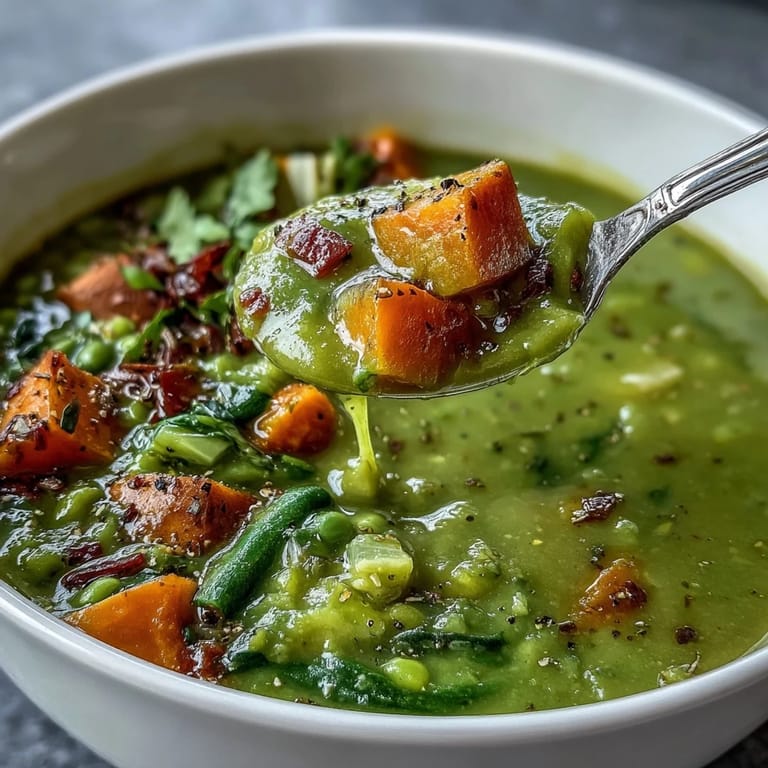
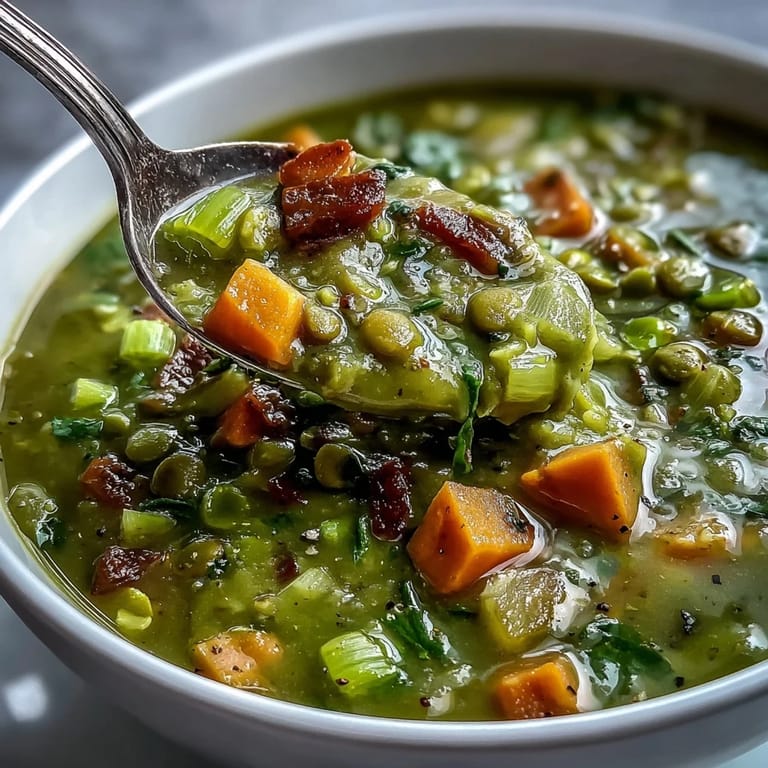
Some people want their split pea soup smooth as velvet, while others love biting into distinct vegetable chunks. There's no wrong answer—it depends on your mood and who you're serving. I usually blend about half the pot, which gives you that creamy base with little surprises of soft potato and carrot throughout.
Serving and Storage
This soup tastes even better the next day, which makes it perfect for batch cooking on a Sunday and living off all week. The flavors deepen and settle, and honestly, that's when it shines brightest. Refrigerate in airtight containers for up to five days, or freeze for three months—just remember to thaw it gently and add liquid as needed.
- Pair it with a slice of crusty bread and maybe some sharp cheddar for a complete meal.
- A simple green salad on the side cuts through the richness beautifully.
- Leftovers reheat perfectly on the stovetop over medium-low heat with a splash of water stirred in.
 Pin It
 This is the kind of recipe that teaches you comfort isn't complicated—it's just good ingredients given time and attention. Make it once and you'll understand why people ask for it again and again.
Recipe FAQs
- → Do split peas need soaking before cooking?
No soaking required. Split peas naturally break down during simmering, creating that characteristic creamy thickness without any pre-soaking step.
- → How do I achieve the smoky flavor without meat?
Smoked paprika is your best plant-based alternative. Just 1-2 teaspoons stirred in during the last 15 minutes of cooking delivers excellent depth and smokiness.
- → Can I freeze this for later?
Absolutely. Portion cooled soup into airtight containers or freezer bags, leaving room for expansion. It keeps beautifully for up to 3 months. Thaw overnight in the refrigerator.
- → Why does my soup turn out too thick?
Split peas continue absorbing liquid as they cool. Simply add more water, broth, or even coconut milk when reheating to reach your preferred consistency. The flavors remain intact.
- → What's the best way to blend for creaminess?
An immersion blender directly in the pot offers easiest control. Pulse briefly to leave some texture, or blend longer for perfectly smooth results. If using a standard blender, work in batches and never fill past halfway.
- → How long will leftovers keep?
Stored in an airtight container, refrigerated leftovers stay fresh for 4-5 days. The flavors actually develop and deepen over time, making it an excellent make-ahead option.