 Pin It
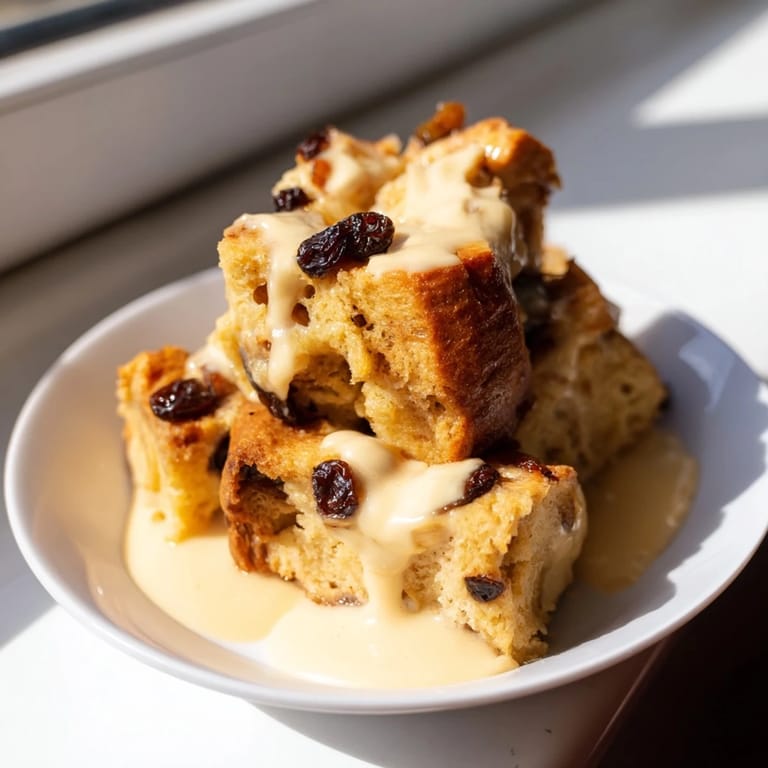
 My grandmother's kitchen smelled like butter and vanilla on Sunday mornings, and that's where I first understood that bread pudding wasn't about rescuing stale bread—it was about transforming something ordinary into pure comfort. She'd slice through day-old brioche with the confidence of someone who'd made this a hundred times, and I'd watch the cubes disappear into a custard so silky it seemed impossible. That first spoonful, warm with cinnamon and studded with plump raisins, taught me that the best desserts don't announce themselves loudly; they whisper.
I made this for my neighbor when she came home from the hospital, and watching her eyes close while she ate the first bite told me everything about why comfort food matters so deeply. She didn't ask what was in it or how long it took; she just asked when I'd make it again. That's when I realized bread pudding isn't really a recipe—it's an apology made delicious, or a celebration wrapped in custard.
Ingredients
- Stale bread, cubed (6 cups): Day-old French bread or brioche is ideal because the slight dryness helps it soak up every drop of custard without turning mushy; if your bread is fresh, leave it out uncovered overnight.
- Raisins (1 cup): Plump them up slightly by rinsing them in warm water a few minutes before using—they'll taste less like tiny stones and more like little bursts of sweetness.
- Whole milk and heavy cream (2 cups and 1 cup): The combination creates richness without heaviness; don't skip the milk thinking cream alone will be better, because balance is everything.
- Eggs (4 large): These are the custard's backbone, so use fresh, room-temperature eggs for the smoothest mixture.
- Granulated sugar (3/4 cup): This sweetens the custard and helps create that gentle puff in the oven; measure it carefully rather than eyeballing.
- Vanilla extract (2 tsp): Use real vanilla—the imitation stuff tastes thin and sharp in something this delicate.
- Cinnamon and nutmeg (1/2 tsp and 1/4 tsp): These warm spices are what make bread pudding feel like a hug; don't skip them and don't overpower them.
- Salt (1/4 tsp): A pinch that nobody notices but everyone would miss if it was gone.
- Unsalted butter, melted (2 tbsp plus extra for greasing): This adds richness and helps the custard cook evenly; make sure the dish is well-buttered so nothing sticks.
Tired of Takeout? 🥡
Get 10 meals you can make faster than delivery arrives. Seriously.
One email. No spam. Unsubscribe anytime.
Instructions
- Set your stage:
- Preheat your oven to 350°F and butter a 9x13 inch baking dish until it's well coated in all corners. Cube your bread into roughly one-inch pieces—uniform size matters because ragged chunks cook unevenly.
- Layer the foundation:
- Scatter the bread cubes into the dish and sprinkle the raisins evenly throughout, nestling them into the gaps. This way, every spoonful of the finished pudding will have that little burst of sweetness.
- Build the custard:
- In a large bowl, whisk together milk, cream, eggs, sugar, vanilla, cinnamon, nutmeg, salt, and melted butter until absolutely smooth. The whisking matters—you're not just mixing, you're incorporating air that will help the pudding rise gently in the oven.
- The crucial soak:
- Pour the custard slowly over the bread, then gently press the cubes down with the back of a wooden spoon so they start drinking in the liquid. Let it sit for 10 minutes—this waiting is where the magic begins, as the bread begins its transformation from crisp to tender.
- Bake to golden:
- Slide the dish into the oven and bake for 40–45 minutes until the top is puffed and golden brown and a knife inserted in the center comes out clean. The pudding will jiggle slightly when you move the dish—that's right, not overdone.
- Make the sauce:
- While the pudding bakes, combine cream, sugar, and butter in a small saucepan over medium heat, stirring until the sugar dissolves completely and the mixture just begins to bubble. Remove from heat, stir in vanilla and a pinch of salt, then let it cool slightly so it's warm but not screaming hot when you pour it.
- The finale:
- Bring the pudding to the table warm, drizzle it generously with sauce, and watch everyone slow down to savor it.
 Pin It
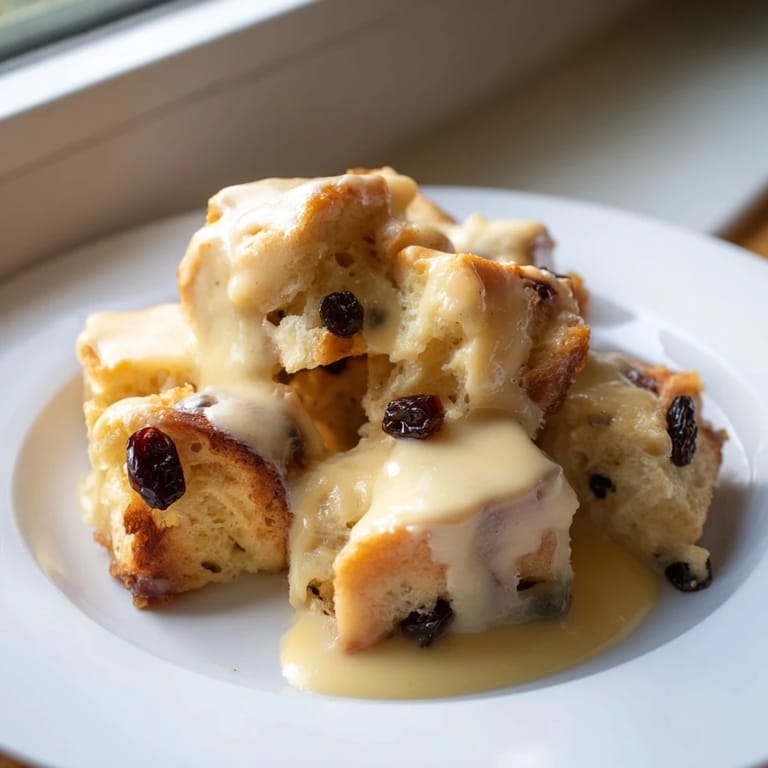
 There's a specific moment when bread pudding shifts from dessert to memory—usually around the second or third spoonful when someone closes their eyes and stops talking. I've seen it happen in kitchens full of chatter and in quiet rooms where the only sound is a spoon against a bowl. That's when you know you've done something right.
Beyond the Basics
Once you've made this classic version a few times, you'll start imagining what else could live in that custard. Bourbon or rum whispered into the mixture adds warmth without shouting, dried cranberries bring a gentle tartness that cuts through richness, and a handful of chocolate chips will make it feel like a different dessert entirely. The bread pudding is sturdy enough to hold your additions while staying true to itself.
The Sauce Story
The sauce is honestly the secret weapon—it turns warm spoon cake into something that feels like you're at a proper restaurant. It comes together in five minutes, tastes like it took all day, and makes even a slightly overbaked pudding taste forgiving and luscious. Some people pour it warm over the pudding, others drizzle it at the last moment; I've done both and loved both.
Storage and Serving
Bread pudding keeps beautifully, which means you can actually make it the day before, cover it, and reheat it gently in a 300°F oven until it's warm through—sometimes even better because the flavors have settled.
- Leftovers taste wonderful cold the next morning with a cup of coffee, or reheated until just warm and slightly custardy.
- You can freeze unbaked bread pudding for up to three months; just bake it directly from frozen, adding 10–15 extra minutes to the baking time.
- The sauce can be made a day ahead and gently warmed before serving.
 Pin It
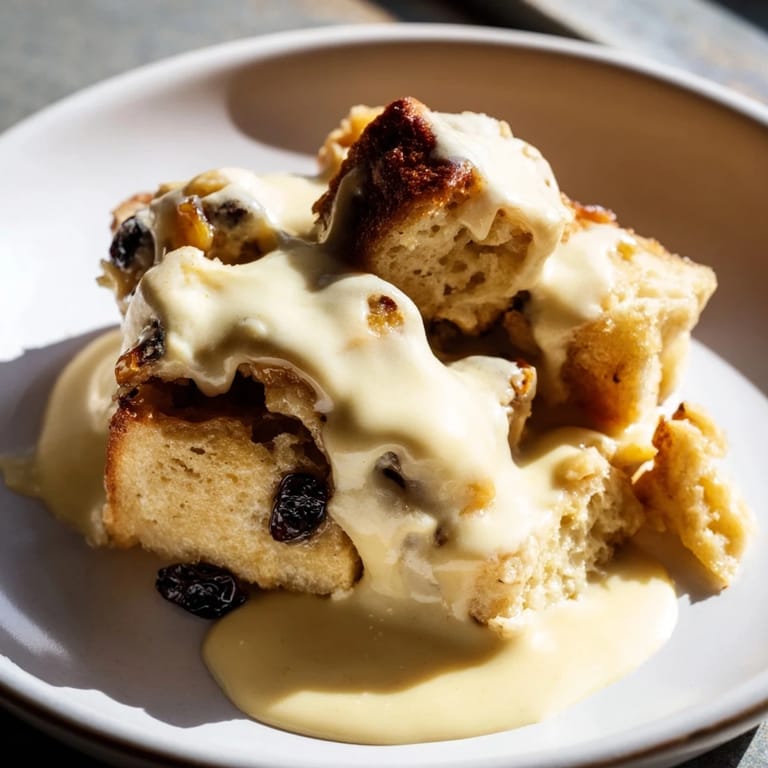
 This bread pudding has fed my family through quiet winters and celebrated afternoons, and that's really all a recipe needs to be. Make it, serve it warm, and let the sauce do the talking.
Recipe FAQs
- → What bread works best for this dish?
Using stale French bread or brioche helps absorb the custard well while providing a tender crumb after baking.
- → Can I substitute raisins with other ingredients?
Dried cranberries, chopped dates, or chocolate chips work as flavorful alternatives to raisins.
- → How is the custard mixture prepared?
The custard is made by whisking milk, cream, eggs, sugar, vanilla, and warm spices together until smooth before pouring over bread cubes.
- → What does the sauce add to the dish?
The warm creamy sauce enhances sweetness and moisture, complementing the baked custard and bread textures.
- → How long should the dish soak before baking?
Allow the bread to soak in the custard mixture for about 10 minutes to ensure full absorption and tenderness.
- → Is it okay to reheat leftovers?
Leftovers can be gently reheated in the oven or microwave to restore warmth and softness.