 Pin It
 My sister called one Saturday morning asking if I could bring something to her kid's soccer game snack table, and I found myself standing in my kitchen at 7 AM, thinking about the simplest thing that would make people smile. Doughnut holes came to mind—not because they're fancy, but because they disappear faster than you can fry them, and there's something about that warm, powdered sugar-dusted ball of fried dough that makes everyone pause. I'd made them once before during a late-night craving, and the kitchen had smelled so good that my roommate actually woke up asking what was happening. That morning, I decided they deserved a proper place in my rotation.
I remember my attempt at bringing them to that soccer game, frantically packing them into a container while they were still warm, the powdered sugar coating my hands and somehow my face. When I got there and opened the container, a mom I'd never met before grabbed one, took a bite, and just closed her eyes for a second. She didn't say anything, just grabbed another. That moment stuck with me—not because they were perfect, but because something so simple could do that.
Ingredients
- All-purpose flour (2 cups): The foundation of tender dough; measure by spooning and leveling rather than scooping directly from the bag to avoid packing it down.
- Granulated sugar (1/4 cup): Sweetens the dough just enough without making them cake-like; the nutmeg will do most of the flavor lifting.
- Baking powder (1 1/2 tsp): Creates lift so they stay light and pillowy instead of dense—don't skip this or you'll be disappointed.
- Salt (1/2 tsp): Brings out the vanilla and warm spices; it's a small amount but essential for balance.
- Ground nutmeg (1/2 tsp): The secret ingredient that makes people pause and ask what's different about your doughnuts; it's warm, almost nostalgic.
- Whole milk (2/3 cup): Keeps the dough tender and adds a subtle richness that won't come through any other way.
- Large eggs (2): Bind everything together and give the doughnuts structure while they fry.
- Unsalted butter (2 tbsp, melted): Use melted rather than room-temperature so it incorporates smoothly without overworking the dough.
- Vanilla extract (1 tsp): Enhances the warmth of the nutmeg and makes the flavor feel complete.
- Vegetable oil (4 cups): For frying at 350°F; too cool and they'll absorb oil, too hot and they'll burn before cooking through.
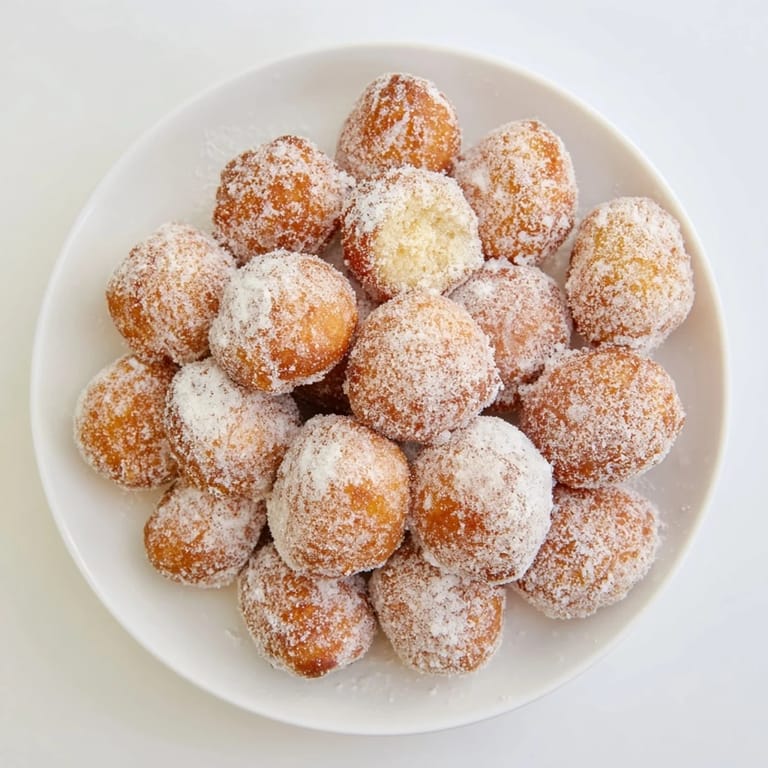
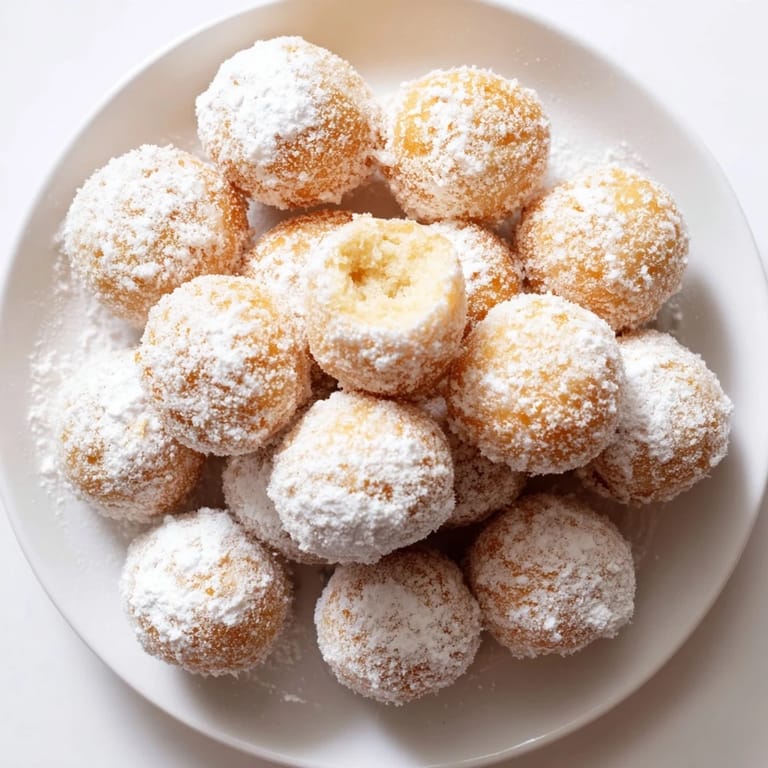
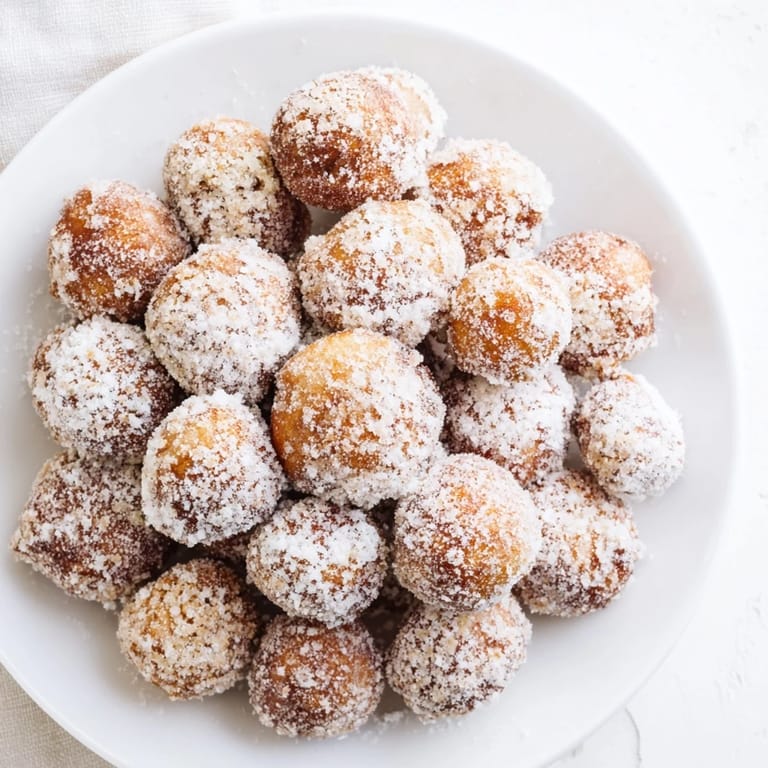
- Powdered sugar or cinnamon sugar: For coating; choose based on mood—powdered sugar feels classic, cinnamon-sugar feels cozy.
Tired of Takeout? 🥡
Get 10 meals you can make faster than delivery arrives. Seriously.
One email. No spam. Unsubscribe anytime.
Instructions
- Whisk the dry foundation:
- In a large bowl, whisk together flour, granulated sugar, baking powder, salt, and nutmeg until everything is evenly distributed. You'll notice the nutmeg specks throughout, which is exactly right.
- Combine the wet ingredients:
- In a separate bowl, whisk milk, eggs, melted butter, and vanilla until the mixture is homogeneous and smooth. This is where the richness comes in.
- Bring them together gently:
- Pour the wet ingredients into the dry bowl and fold everything together with a spatula or wooden spoon, stirring just until you don't see streaks of flour anymore. Stop before you think you're done—overmixing makes them tough and heavy.
- Heat your oil to the right temperature:
- In a deep pot or Dutch oven, heat vegetable oil to 350°F (175°C). Use a thermometer; guessing is how you end up with either soggy or burnt doughnuts.
- Scoop and fry in batches:
- Using a small cookie scoop or a spoon, drop tablespoon-sized balls of dough into the hot oil, working in batches so the temperature stays consistent and the oil isn't crowded. You should hear them sizzle immediately.
- Watch for the golden moment:
- Fry for 2 to 3 minutes, using a slotted spoon to gently turn them occasionally so they brown evenly on all sides. When they're golden brown and rise slightly, they're done.
- Drain on paper towels:
- Remove them with a slotted spoon and let them rest on paper towels for a minute or two; this absorbs excess oil without cooling them down too much.
- Coat while warm:
- While they're still warm enough to hold the coating, toss them in powdered sugar or a cinnamon-sugar mixture. The warmth helps the coating stick, and the contrast between warm dough and cool sugar is part of the magic.
 Pin It
 There's a specific point in making doughnuts when you bite into one that's still warm from the oil and the powdered sugar melts on your tongue—that's the moment you realize why people love them. My first real success with these was when I stopped overthinking and just let the process be simple, trusting that warm dough and hot oil know what they're doing.
The Art of the Perfect Fry
Frying isn't intimidating once you accept that oil has rules. The thermometer is your friend here, not because you need to be precious about it, but because consistency between batches matters. I learned this by burning the first batch and then letting the oil cool too much for the second batch, ending up with a mix of charred and soggy doughnuts. Now I let the oil come back to temperature between batches—it takes maybe a minute—and everything turns out golden.
Coating Variations and When to Choose Them
Powdered sugar feels like the traditional choice, the one that makes them look like the bakery version. But cinnamon-sugar—half a cup of granulated sugar stirred with a teaspoon of cinnamon—feels warmer and less precious, more like something homemade. I've started asking myself in the moment which feeling I want to create, and the answer usually depends on whether I'm bringing them somewhere or keeping them for myself.
Storage and Serving Wisdom
Doughnut holes are genuinely best within a few hours of frying, when they still have some tenderness. They'll keep in an airtight container for up to a day, though they lose that just-fried texture. If you want to get creative, you can pierce them with a skewer after frying and fill them with jam or melted chocolate while they're still warm—it's an easy upgrade that feels fancy.
- Serve them immediately for the best contrast between crispy outside and tender inside.
- If you're making them ahead, reheat them gently in a 300°F oven for a few minutes to restore some of that warmth.
- A pinch of cardamom in the dough brings an unexpected spice that makes people wonder what's different about yours.
 Pin It
 There's something quietly satisfying about making something fried and indulgent from scratch, especially when it turns out better than store-bought. These doughnuts taught me that sometimes the simplest things—warm dough, hot oil, a quick coat of sugar—are exactly what people need.
Recipe FAQs
- → What type of flour works best for these dough balls?
All-purpose flour provides the right texture and structure for a tender yet sturdy dough suited for frying.
- → How can I ensure the dough balls are cooked evenly?
Maintain the oil temperature around 350°F and fry in small batches, turning occasionally for an even golden color.
- → Can I add different flavors to the dough?
Yes, spices like nutmeg or cardamom can be mixed into the dough for added warmth and complexity.
- → What oils are recommended for frying?
Vegetable oil or other neutral oils with a high smoke point are ideal for achieving crisp, non-greasy results.
- → How should these fried dough balls be stored?
Store in an airtight container at room temperature for up to one day to preserve freshness and crispness.